WA DOSH Adopts New Crane Rules
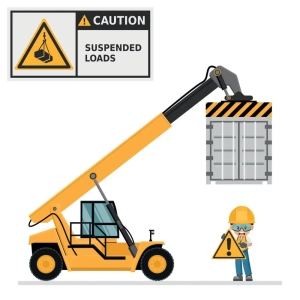
The rough terrain reach forklift, or Powered Industrial Truck (PIT) as referenced in OSHA regulations, is widely used on construction sites and provides an excellent means for moving and installing electrical equipment.
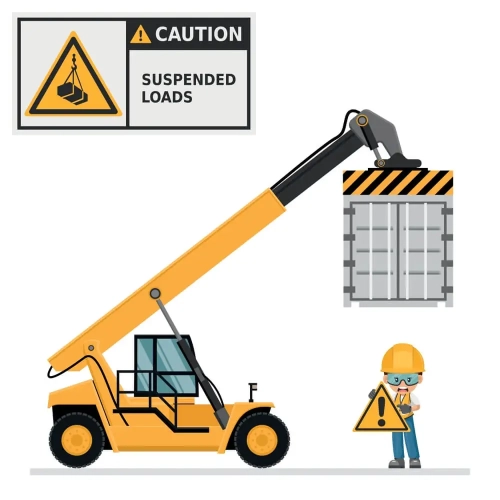
Typically, loads are to be carried on top of the forks with maximum lifting capacities identified when the load center is placed 24 inches above the forks, and 24 inches from the backrest. In some situations, we also suspend loads below the forks to facilitate final placement of materials.
The use of forklifts to move suspended loads has significantly increased since 2010 due to new OSHA regulations mandating that Crane operators had to be Certified to operate a specific type of crane. This lengthy and costly process required passing both written and practical tests delivered by a third party, nationally accredited testing organization. At that time, forklifts were exempted from the crane rules so they became our new crane-like equipment of choice. Operators still had to be properly trained and Qualified by their employer, a vendor or JATC, but not formally Certified.
In Washington State, that exemption is no longer a workaround for forklift operators who move suspended loads. On August 5th, WA Department of Safety and Health (DOSH) adopted new crane rules that now include PITs.
If your forklift operators ONLY move materials on top of the forks, then there is nothing more to do. If they also suspend loads, you need to start looking for a nationally accredited training / testing organization soon. (the NIETC is not one) While the rule is effective now, employers have until January 1, 2027, to meet the forklift (used like a crane) operator Certification requirements.
Other new crane rules requirements include the on-site presence of a Lift Director who oversees all work that is being performed by a crane and rigging crew. The Lift Director has to be Qualified by either a third-party evaluator or an employer/s qualified evaluator.
Keep in mind this is only applicable to work performed in Washington. Oregon OSHA reportedly does not plan to adopt similar requirements. Remember, anytime we plan to suspend a load under the forks you need approval from the lift manufacturer as the rated capacity charts do not reflect this hoisting activity. Both OR-OSHA and WA DOSH can ask you for that documentation.